Solid Ground Aviation Fort Meade MD - Pilots smiling inside plane on the ground

Aviation & Flight Training
Guides.

Deep dive into aviation training pathways, simulator advantages, and partnership blueprints from Solid Ground Aviation.

Student studying aviation charts and simulator cockpit at Solid Ground Aviation

Knowledge Hub

Expert Guidance for Modern Aviators & Flight Schools

Whether you are starting from zero hours, refining instrument currency, or seeking to turn an underutilized room into a profitable simulator center, our aviation guides deliver structured, actionable knowledge. Explore how simulation bridges the gap between ground school and real-world cockpit command.

Schedule an Exploratory Session

Knowledge Hub

Explore Our Aviation Guides

Browse our in-depth guides covering flight school partnerships, simulator training efficiencies, and pilot accelerator programs.
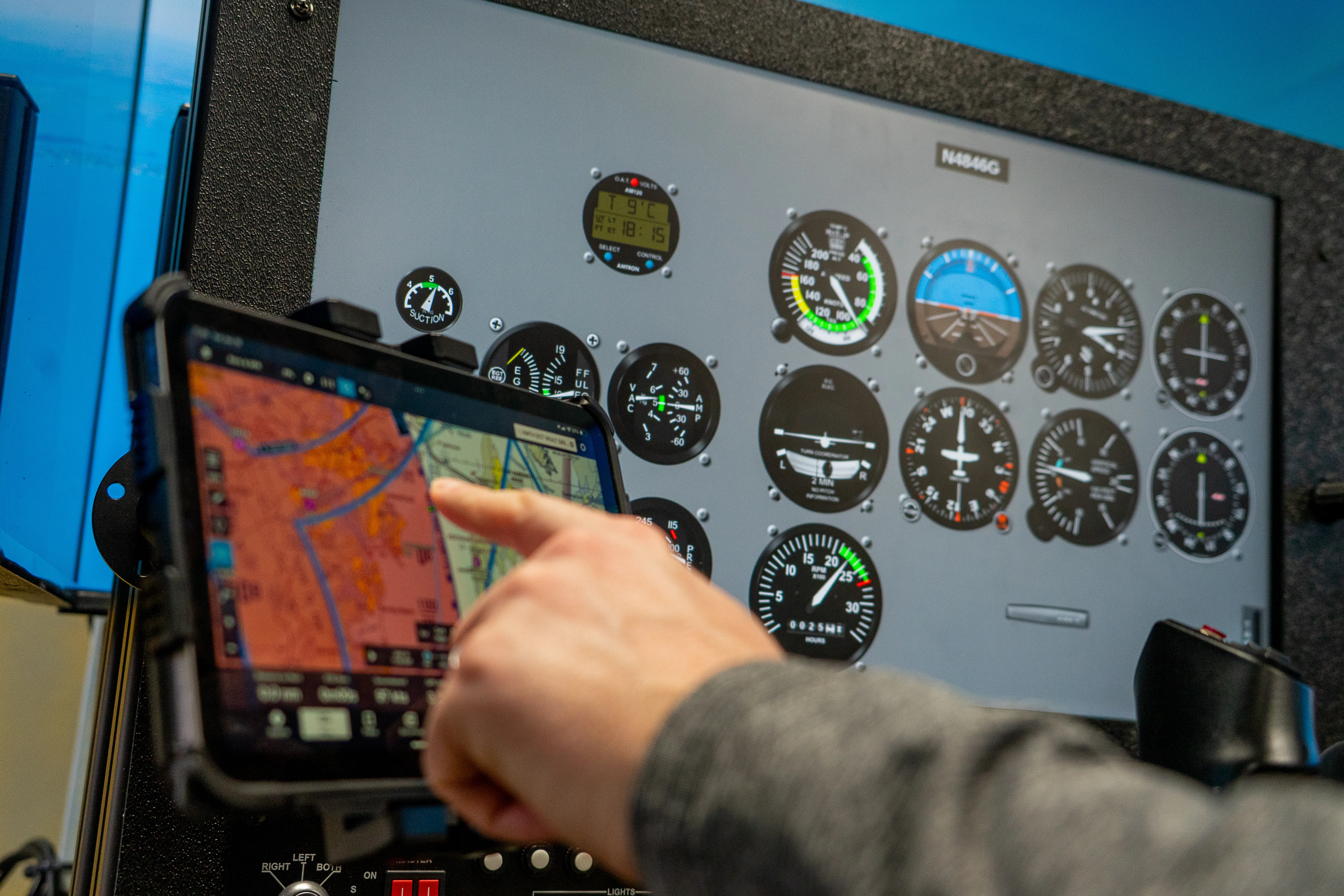
Pilot training in flight simulator

Ready to Elevate Your Flight Training?

Get in touch with our team at Tipton Airport (KFME) to discover how advanced simulation can save you thousands in aircraft rental and accelerate your ratings.

FREQUENTLY ASKED QUESTIONS

Frequently Asked Questions

Common questions regarding flight simulator training, certification requirements, and partner operations.

CFI & CFII Accelerator

A simulator-based program designed to enhance your instructional technique, focusing on teaching methods, error correction, and scenario-based training in both VFR and IFR environments.
For aspiring CFIs and CFIIs preparing for checkrides, or current instructors looking to maintain and improve their teaching proficiency.
You'll learn how to demonstrate maneuvers effectively, manage simulated students, handle unexpected scenarios, and refine your communication and instructional flow.
Training is billed hourly — $65/hr for the simulator and $60/hr for instruction. Most sessions last 2–3 hours including briefing and debriefing.

Engine Failure Bootcamp

An intensive training program that builds instinctive responses and sound decision-making for engine failures and power-loss emergencies.
You’ll practice forced landings, best glide management, restart procedures, and emergency checklists in both VFR and IFR environments.
The session starts with a detailed pre-brief, followed by multiple failure scenarios in the simulator, and concludes with a full debrief and performance review.
Because simulators let you safely experience a wide range of realistic emergencies you could never safely practice in an aircraft.

Fear of Flying

A structured and supportive training experience designed to help you overcome anxiety related to flying by learning how flight works in a calm, simulator-based environment.
Not at all. This course is tailored for complete beginners or passengers who want to feel more confident about air travel.
Ground discussion about how airplanes fly, turbulence, and air traffic control, followed by a realistic but relaxed simulator session where you can explore flight from the pilot’s seat.
Yes — all sessions are one-on-one in a controlled simulator environment. You can pause, ask questions, or stop at any time.

First Steps Course

The First Steps Course is the perfect entry point for anyone curious about learning to fly. It combines a structured consultation with an introductory simulator session, giving you a clear understanding of the Private Pilot License (PPL) process before committing to full training.

You’ll leave with a realistic plan, answers to your questions, and the confidence to take your next step in aviation.

This course is designed for:

  • Prospective pilots unsure where to start
  • Those curious about the time, cost, and requirements to get a PPL
  • People who want to experience flight training without a big commitment
  • Serious prospects looking for structured guidance before enrolling

We walk you through the entire training process and give you a hands-on introduction to flying:

  • Basic prerequisites (age, language, and citizenship requirements)
  • Ground school options and FAA written test overview
  • Medical certificate process (3rd and 1st class, MedXPress)
  • Recommended equipment: headsets, ForeFlight, iPad, study materials
  • Training timeline: FAA minimum vs. realistic national average
  • Common mistakes and how to avoid them
  • Introductory simulator flight, a “taste” of your first lesson

Unlike a free tour or casual visit, this course is structured to give real value while helping ensure that only serious future pilots move forward. It’s a smart way to get clarity without wasting time or money.

  • Low commitment, high clarity
  • Realistic simulator experience
  • Step-by-step review of what it takes to get started
  • Personalized guidance for your next step

Most students who complete the First Steps Course choose to continue with our New Pilot Accelerator Course, which focuses on foundational flight procedures in the simulator before stepping into the aircraft.

This saves both time and money, setting you up for success from your first flight lesson.

Learn more about the New Pilot Accelerator course

Flight 101

Yes. Our goal is to build the aviation community. There is no credit card required and no obligation to sign up for lessons.
Not at all. This session is designed for people on all levels of flight experience.
Absolutely! Flying is better with a support system. Just make sure they register as well so we have enough seating.

Frequently Asked Questions

Yes. Our FAA approved devices let you log actual time toward your certificate; you build instrument currency and procedural mastery without burning expensive aircraft rental fees. Simulators work.

We operate out of Tipton Airport at KFME in Fort Meade, Maryland. Our spot sits right outside the restrictive D.C. SFRA airspace. You spend your paid minutes learning instead of waiting out air traffic control holds.

Traditional aircraft rentals cost up to $250 per hour just to practice checklists or sit through weather delays. Our advanced training devices cost far less per hour; you slash thousands off your total training budget.

Absolutely. We take you from your very first lesson all the way through your core ratings. You build hours as a flight instructor; then you transition straight into a regional airline seat.

ForeFlight VFR Mastery

A hands-on simulator session that teaches you how to plan, brief, and fly VFR routes using ForeFlight on your iPad or EFB.
Student pilots, private pilots, and anyone who wants to become proficient using ForeFlight for navigation, traffic awareness, and weather tools.
Flight planning, weight & balance, filing flight plans, navigation logs, and live use of ForeFlight features while flying in the simulator.
Yes — bring your own iPad with ForeFlight installed to train exactly the way you’ll use it in the cockpit.

General

It's hands-on flight practice in a high-fidelity simulator that replicates the controls, instruments, and visuals of an airplane. You can take off, navigate, and land without leaving the ground, practicing at your own pace and retrying maneuvers as needed. This allows for safe, realistic training, even in challenging conditions like crosswinds or low visibility. Learn more about our simulators.
Yes! In two main ways.
  1. The FAA allows 2.5 hours to be counted towards the Private Pilot requirements, and 20 hours towards the Instrument rating requirements.
  2. The real benefit lies in reducing the amount of time required to train in the aircraft. Most students require more than the FAA minimum hours before they are ready for the checkride. Spending some of those extra hours in the simulator at a far lower cost will help save money and keep your training on track. See how the savings add up.
Our simulator rents for $65/hr, and instruction is $60/hr.

When you compare that to the typical $170-$200+/hr cost of renting an aircraft, the value is clear. You get more learning, in less time, at a fraction of the cost. Compare the costs side-by-side.
Simulators save you time by eliminating travel to practice areas, weather cancellations, and other ground-based delays. Every hour in the sim is dedicated to learning, which means you can master procedures faster and make your time in the aircraft more efficient. See a detailed time and cost breakdown.
Yes! Our FAA approved AATDs allow you to log all your 61.57 instrument approach currency with or without an instructor. Same-day appointments are often available. You can see our simulator's FAA approval letter here.
Pilots of all levels, from brand-new enthusiasts to experienced professionals. It's great for prospective pilots, student pilots, licensed pilots looking to stay sharp, and those practicing advanced or emergency procedures.
No prior flying experience is required. Beginners can start with an intro course, and experienced pilots can jump into advanced sessions. Solo use requires a pilot certificate and a short orientation. Check out our New Pilot Acelerator Course
Absolutely. Many students use our simulator to reinforce skills learned elsewhere. You can train with you current instructor in our simulator or with one of our instructors to get a fresh perspective!
We don't operate our own aircraft, by design. Instead, we partner with local flight schools to give you a smooth transition between simulator training and real-world flying.

Our instructors can also provide training in your personally owned aircraft, ensuring seamless continuity between your simulator sessions and in-aircraft experience.
Most training sessions last between 1-3 hours. We can train longer, but we focus on quality training and find that this timeframe produces the best results.
Our training center is open from 7AM-10pm 7 days a week. We link you with an instructor that matches your availability to maximize convenience.

GNS430/530 Mastery

A dedicated session for mastering Garmin’s GNS430 and GNS530 avionics systems, focusing on setup, navigation, and IFR operations.
Because avionics skills are best learned without pressure — you can pause, repeat, and explore all menus without burning fuel or holding up traffic.
Flight plan creation, direct-to navigation, approach loading and activation, OBS mode, and emergency use cases.
Absolutely — this training saves valuable aircraft time by letting you master avionics flow and procedure on the ground first.

IMC Emergencies Course

A scenario-based training experience designed to prepare instrument-rated pilots for realistic in-flight emergencies under IMC conditions.
You'll handle partial panel failures, vacuum loss, electrical issues, engine failures in IMC, and lost communications — all in a safe simulator setting.
Simulators allow you to experience complex or dangerous failures safely, repeat scenarios instantly, and learn proper response techniques with instructor guidance.
Ideal for active IFR pilots seeking to improve decision-making, emergency readiness, and confidence when facing unexpected challenges in the clouds.

IMC Emergencies

A course focused on handling unexpected situations in instrument meteorological conditions — from disorientation to equipment failures.
Partial panel flying, vacuum failures, loss of GPS signal, ATC reroutes, spatial disorientation, and emergency diversions.
Instrument-rated pilots and IFR students who want to improve their confidence and reaction time when things go wrong.
You can safely repeat complex emergencies, analyze your responses, and build muscle memory without risk or added cost.

Instrument Currency Program

A focused simulator training package to help current IFR pilots maintain legal instrument currency and sharpen their procedural proficiency.
It’s recommended every six months to maintain your FAR 61.57 instrument currency, though many pilots choose quarterly refreshers.
Each session covers at least six approaches, holding procedures, intercepting and tracking courses, and emergency scenarios in IMC conditions.
Yes — time in our FAA-approved SG-series simulator counts toward maintaining instrument experience under FAR 61.57.

Instrument Currency

A structured simulator session designed to help you meet 14 CFR 61.57 instrument currency requirements efficiently.
Six instrument approaches, holds, intercepts, and course tracking — all in compliance with FAA regulations.
Yes — our FAA-approved AATD allows you to log approaches and holding procedures toward maintaining instrument currency.
You can complete approaches solo after checkout, or with one of our CFII instructors for proficiency verification.

Instrument Proficiency Check Accelerator

A targeted simulator-based course that helps instrument-rated pilots renew their currency faster and more affordably, meeting FAA IPC requirements.
The IPC Accelerator covers all maneuvers and procedures in the simulator first, allowing most pilots to complete the in-aircraft signoff in as little as one flight.
You'll train on holds, approaches, missed approaches, departures, RNAV procedures, emergencies, and real ATC radio practice using realistic IFR scenarios.
Simulator sessions cost $55/hr versus $180/hr for aircraft rental — saving you about $125 per hour while maintaining full FAA credit for approaches and holds.

Instrument Rating Accelerator

A focused training path designed to prepare you for the Instrument Rating checkride with heavy use of simulator-based IFR training.
Private pilots ready to pursue their instrument rating or students already in an IFR program looking to reduce aircraft costs.
Scenario-based IFR training including approaches, holds, navigation procedures, and emergency management with guided instruction.
You’ll master procedures and avionics on the ground, dramatically cutting the hours needed in the aircraft.

IPC Accelerator

A simulator-based preparation course for your Instrument Proficiency Check (IPC), allowing focused practice before the official evaluation.
Approaches, holds, missed procedures, partial panel work, and emergency scenarios in a realistic IFR environment.
While the full IPC sign-off must be performed by a CFII, most of the preparation and skill review can be completed here in the simulator.
Typically 2–3 simulator sessions, each lasting 1.5–2 hours with full briefing and debriefing.

Jet Transition

A simulator-based training designed to help piston or turboprop pilots transition to jet aircraft operations and modern avionics systems.
Commercial pilots, corporate candidates, and airline applicants preparing for interviews or type-rating programs.
High-altitude operations, jet aerodynamics, CRM, automation management, and turbine system familiarization.
Yes — we include simulator profiles and flows commonly used in airline and corporate interview prep.

Licensed Pilots Training

The Licensed Pilots Training program is designed to help current pilots maintain proficiency, sharpen their avionics knowledge, and advance their aviation careers. Whether you're a weekend flyer or preparing for professional opportunities, our FAA-approved simulator programs provide an efficient and cost-effective way to stay sharp.

This training pathway includes recurrent training, advanced avionics mastery, and scenario-based proficiency courses tailored to your specific goals.

This program is ideal for:

  • Private, commercial, and ATP-rated pilots wanting to stay proficient
  • Instrument-rated pilots maintaining currency
  • Rusty pilots looking to refresh their skills before returning to active flying
  • Flight instructors and airline candidates preparing for the next career step

Our curriculum offers focused modules to meet different pilot needs, including:

  • Rusty Pilot Refresh: Get back in the cockpit with confidence.
  • IPC Accelerator & Instrument Currency: Regain or maintain IFR proficiency efficiently.
  • IMC Emergencies: Practice high-risk scenarios safely in the simulator.
  • Avionics Mastery: GNS, GTN, Garmin G5, and G1000 focused training.
  • Jet Transition & Interview Prep: Prepare for airline interviews and simulator profiles.
  • Personalized Training: One-on-one instruction for specific goals.

Training in our FAA-approved SG-2 flight simulator offers significant advantages over traditional aircraft-only training:

  • Lower costs compared to flying hours
  • 24/7 availability for solo currency sessions
  • Safe environment to train IMC emergencies and complex scenarios
  • Ability to pause, repeat, and reposition at any phase of flight
  • Faster mastery of avionics and procedures

Many of our courses directly support FAA regulatory and currency requirements, such as:

  • Instrument Currency (14 CFR 61.57)
  • IPC completion prep
  • Flight Review elements
  • FAA WINGS credit for Rusty Pilot Refresh

By completing these modules in the simulator, you reduce your required aircraft time and focus your flight hours on demonstrating proficiency, not practicing basic procedures.

Upon completion, pilots typically:

  • Schedule a shorter, more efficient flight review or IPC in the aircraft
  • Log currency approaches and holds at a fraction of the cost
  • Receive documentation and endorsements as appropriate
  • Feel more confident and safer in real-world flying

Many pilots also continue with advanced courses, such as Jet Transition & Interview Prep or CFI Accelerator, to progress toward professional goals.

New Pilot Accelerator

A 4-part simulator-based course introducing you to flight controls, radio communication, navigation, and aircraft procedures before your first real flight.
Aspiring pilots who want to build confidence and save money before starting actual flight lessons.
Checklists, navigation, pattern work, and emergency procedures — all safely practiced on the ground first.
You’ll start your aircraft lessons already comfortable with flight fundamentals, reducing overall training costs.

Partnership & Operations

One of the biggest advantages of our system is its compact footprint. You only need a standard-sized office or a spare room at your facility.

The simulator runs on standard electrical outlets and does not require heavy industrial modifications. We will help you evaluate your specific space during our initial consultation.

Yes. Our commercial simulators are designed to meet rigorous standards. When paired with our structured curriculum and an authorized instructor, the hours logged can be used for instrument currency, proficiency checks, and specific certificate requirements.

Not at all. When you partner with Solid Ground Aviation, you receive our complete, "plug-and-play" educational framework.

This includes an extensive catalog of pre-developed courses covering everything from the New Pilot Accelerator program to advanced avionics and emergency procedures. Your instructors simply follow the proven syllabus.

Our commercial partnership includes a comprehensive support framework. You are never left to figure things out on your own.

We provide ongoing technical support, software updates, and hardware troubleshooting to ensure your operation experiences minimal downtime and maintains a commercial standard of quality.

Shipping and installation fees vary based on your specific location and facility setup.

Once we finalize your partnership structure, we will provide a custom quote and coordinate the logistics to ensure your simulator is delivered, installed, and thoroughly tested before you open your doors.

PPL Maneuver Master

A simulator-based course focusing on perfecting Private Pilot maneuvers like steep turns, stalls, and ground reference patterns.
Student pilots preparing for their PPL checkride or wanting to refine their control precision and flow.
Each lesson isolates a key maneuver, followed by simulator practice and instructor feedback to improve consistency.
Absolutely — it’s one of the best tools to build confidence and smoothness before your practical test.

Private Pilot Accelerator

A guided simulator-based course designed to complement your flight lessons by reinforcing core PPL skills in a controlled, repeatable environment.
Checklists, radio work, pattern entries, navigation, and in-flight decision making — all taught through practical scenarios.
You’ll master procedures faster and spend less money reviewing them in the airplane.
Yes — you can schedule sessions flexibly and focus on the topics you need most.

Private Pilot Supplemental Program

A series of courses designed save you time and money throughout your training by teaching topics in the simulator in a way you could never learn in the airplane
No! Pick and choose what you need throughout your training, or book a custom training session to focus on what you need help with
Most session start with a 30 minute pre-brief covering the academics behind the skill, then we hop in the simulator for a 1.5 hour lesson to put it into practice
Session are billed hourly. Simulator rental is $65/hr and the instructor is $60/hr. You will only pay for the simulator while you are using it

Private Pilot Training

Almost everything! Our simulator is an exceptional procedural trainer, capable of covering nearly every aspect of private pilot training. Some of the most common skills and scenarios include crosswind landings, engine failure procedures, ForeFlight basics, VOR/GPS navigation, and complex airfield operations. You can learn more about our Private Pilot Accelerator program and see a full list of topics.
Yes, and we highly recommend it. Our New Pilot Accelerator course front-loads your first few flight lessons in the simulator, saving you time and money from day one. You'll step into the aircraft fully prepared, confident, and ready to get the most from every hour you fly.

Rusty Pilot Refresh

A focused simulator course designed to help lapsed pilots regain proficiency and confidence before returning to real-world flying.
Pilots who haven’t flown in months or years and want to review airspace, radio communication, and flight procedures.
Normal and emergency procedures, airspace review, pattern work, navigation, and current FAA regulations.
Yes — your simulator time can satisfy elements of the FAA Flight Review when combined with an instructor session.

Rusty Pilot Refresh

A comprehensive refresher course designed to help lapsed pilots regain confidence, review updated procedures, and return safely to active flying.
This course is perfect for certificated pilots who have been out of the cockpit for a while and want to get current again — whether it’s been months or years.
You'll review airspace, regulations, communications, weather briefings, and flight planning, then apply it all hands-on in our FAA-approved simulator.
Most pilots complete the full refresher in one to two sessions depending on proficiency level and comfort with current procedures.

The Simulator Advantages

Simulator training reduces costs by replacing expensive aircraft hours with more affordable, focused simulator time. For example, you can master complex procedures without paying for fuel, transit time to a practice area, or weather delays. You can see a detailed flight training simulator cost comparison on our advantages page.
Yes. Our simulators allow for instant repetition and focused practice on specific skills, like instrument approaches or emergency procedures. This learning density is much higher than in an aircraft, where time is spent on ground taxiing or flying to practice areas. This is a key part of the simulator-first training model that helps you get proficient faster.
Maintaining instrument currency in an aircraft can be costly due to rental fees, fuel, and instructor time. With our FAA-approved simulator, you can log the required approaches and holds at a fraction of the cost, on your own schedule, and without weather concerns. Explore the advantages of simulator training for pilots to see how much you can save.
Maryland's weather can cause significant delays, with over 110 days of precipitation annually. These cancellations disrupt momentum and can add months to your training, while our simulators allow you to train consistently at any time of the year. This is a major factor in how we help pilots save money on pilot lessons.
It makes your expensive aircraft time more effective. By mastering maneuvers, procedures, and avionics in the simulator first, you spend less time in the airplane practicing and more time demonstrating proficiency. This reduces the total number of aircraft hours needed, which is the biggest factor in the overall cost of a private pilot license.

The Simulator

We use our custom-built SG-2, an FAA-approved Advanced Aviation Training Device (AATD). It features wrap-around visuals, authentic controls, and over 16 cockpit configurations, from analog gauges to glass panels like the G1000. You can see our full list of panels on the simulator page.
Yes. We have numerous FAA-certified panel configurations available, including classic 'steam gauges' and modern glass cockpits like the Garmin G1000, G5, and various GPS units. We can also create custom panels to closely match your personal or rental aircraft. You can see our full list of panels here.
Our simulator is designed for immersion. It features force-feedback controls that replicate the feel of the aircraft, stunning 4K wraparound visuals for situational awareness, and full integration with EFB apps like ForeFlight on your iPad. You can learn more about our simulator technology on our page.
Yes, student pilots and beyond can receive a simulator checkout. You'll then have 24/7 access for solo practice.
Yes! Our simulator is an FAA compliant Advanced Aviation Training Device (AATD), which allows for logging certain flight experiences, including approaches for instrument currency. You can review our FAA Letter of Approval (LOA) on our simulators page.
Yes, we do. We offer our SG-series simulators for purchase by flight schools, flying clubs, businesses, or for home use. Pricing varies based on the configuration you need. Please contact us for a sales inquiry.
Simulator training reduces costs by replacing expensive aircraft hours with more affordable, focused simulator time. For example, you can master complex procedures without paying for fuel, transit time to a practice area, or weather delays. You can see a detailed flight training cost comparison on our advantages page.
Yes. Our simulators allow for instant repetition and focused practice on specific skills, like instrument approaches or emergency procedures. This learning density is much higher than in an aircraft, where time is spent on ground taxiing or flying to practice areas. This is a key part of the simulator-first training model that helps you get proficient faster.
Maintaining instrument currency in an aircraft can be costly due to rental fees, fuel, and instructor time. With our FAA-approved simulator, you can log the required approaches and holds at a fraction of the cost, on your own schedule, and without weather concerns. Explore the advantages of simulator training for pilots to see how much you can save.

Youth Discovery Session

A fun and educational simulator experience for young aviation enthusiasts curious about flying.
Typically ages 10–17, but anyone interested in learning about flight is welcome.
Students learn basic flight controls, take off, navigate a short route, and land — all guided by an instructor.
Completely. The entire experience happens in our full-motion simulator, giving a realistic but risk-free flight introduction.

Still have questions?

Get in touch with our team at Tipton Airport to discuss simulator training, scheduling, or custom packages.

CONTACT US