
How Long Does an Accelerated Instrument Rating Take in 2026?

Published by:
Todd O.
Published on:
Read time:
8 min read
You have a private pilot certificate, a free week on the calendar, and a forecast full of low clouds. So how long does an accelerated instrument rating take once you commit? A focused plan can run roughly six weeks of steady work, and weather, airplane availability and examiner scheduling can stretch it. Here is a week-by-week path you can compare against your own calendar.
At Solid Ground Aviation, we build accelerated instrument training around one idea: put the work that does not need an airplane into the simulator, so weather cancels fewer of your lessons.
What the FAA requires before any plan makes sense
An instrument rating is added to your private pilot certificate, and the rules in 14 CFR 61.65 set the floor for your timeline. You need 50 hours of cross-country time as pilot in command, 10 of them in an airplane. You also need 40 hours of actual or simulated instrument time, and 15 of those hours must be instrument training with an authorized instructor.
Two details shape the calendar more than any others. You need 3 hours of instrument training in an airplane within the 2 calendar months before your checkride, and one IFR training flight of at least 250 nautical miles along airways or ATC-directed routing, with an instrument approach at each airport and three different kinds of approach. You also pass the FAA knowledge test and then the practical test, called the checkride, against the FAA Airman Certification Standards for the instrument rating.
These are minimums. Your readiness sets the real finish line, and your instructor recommends you for the checkride when you meet the standard. Our FAQ covers how we schedule sessions if you want the practical side before you plan.
Where simulator hours fit inside the 40
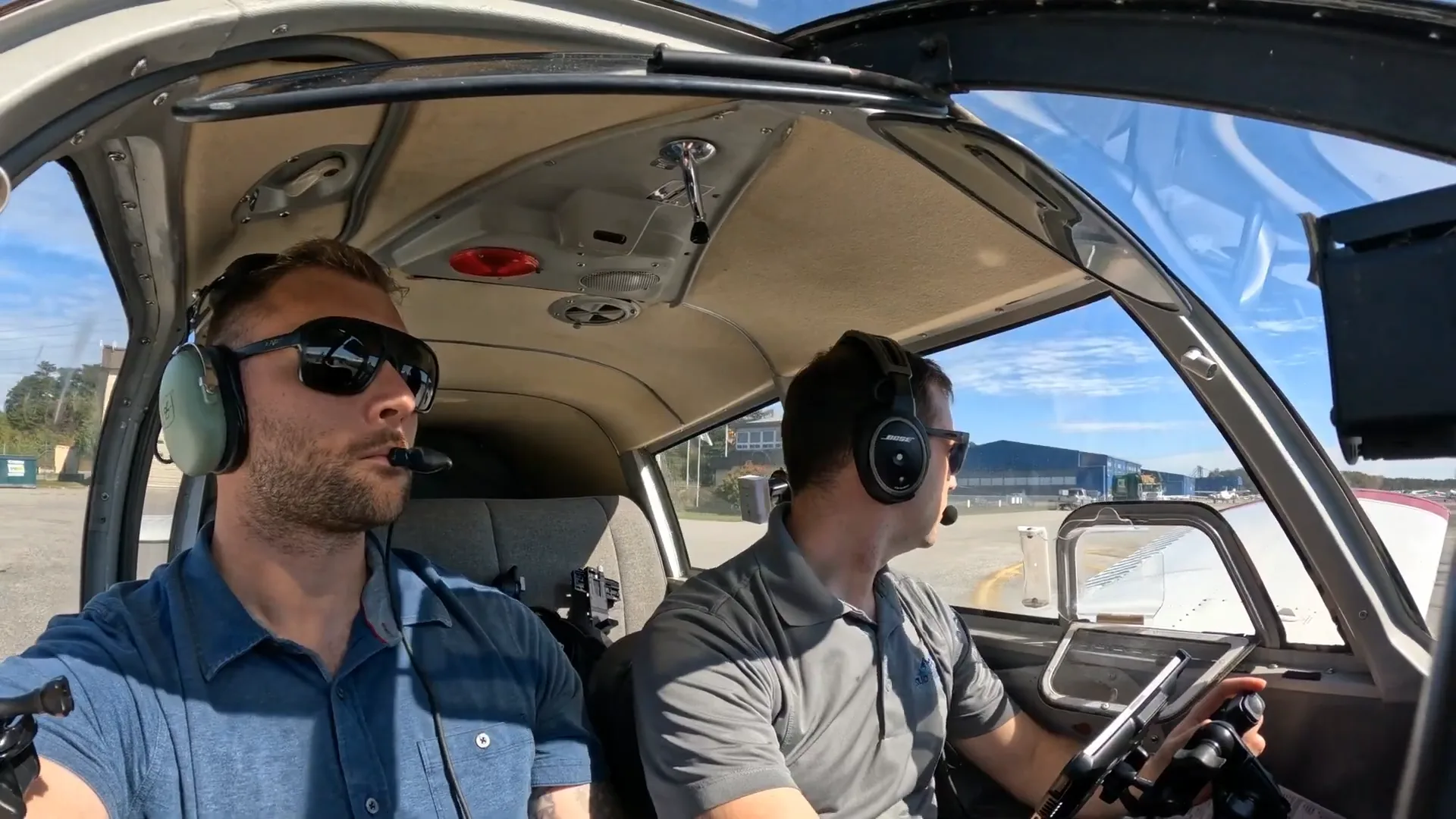
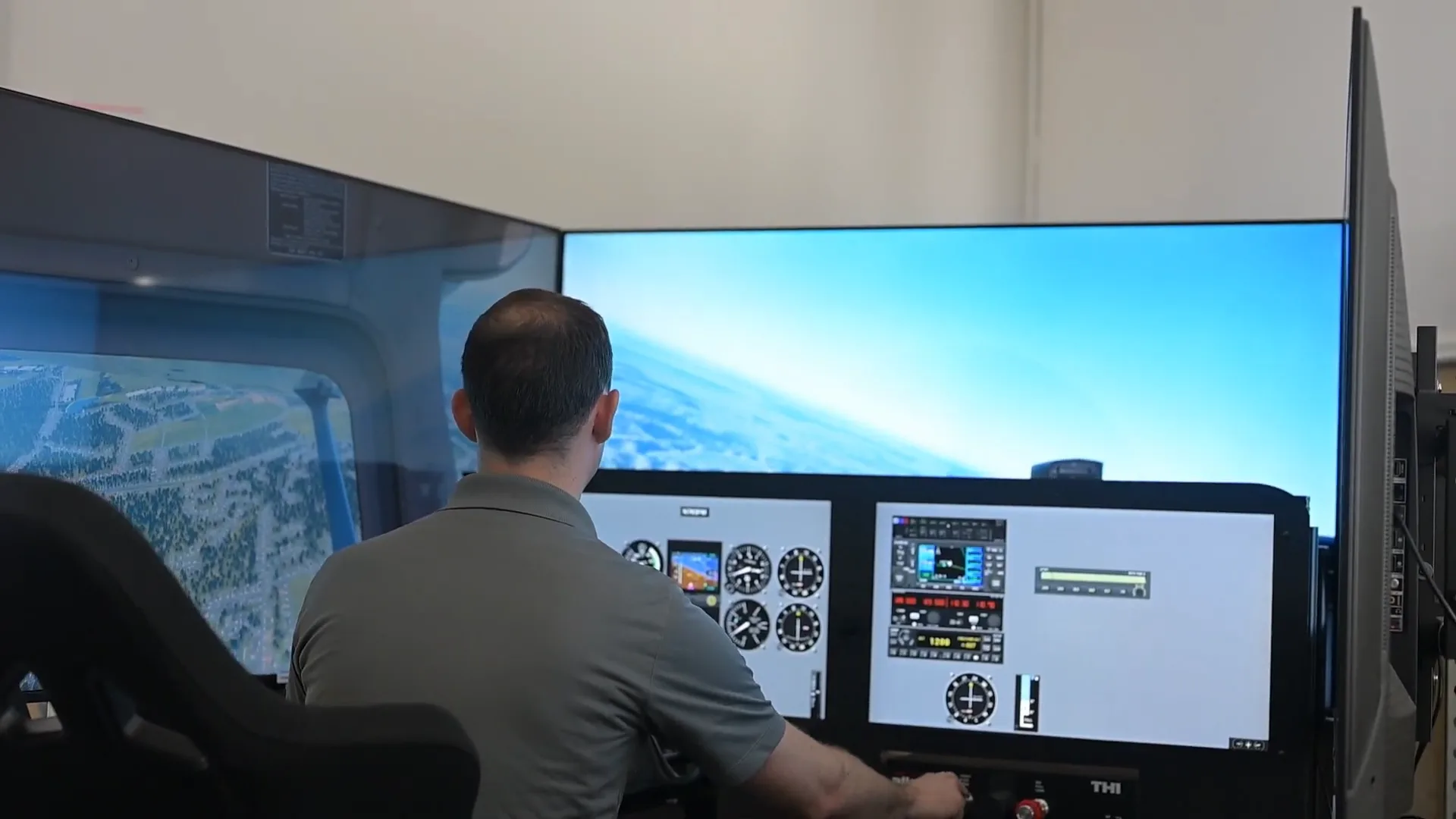
Simulator time can count toward the 40 hours of instrument time, up to a limit that depends on the type of device and its FAA approval. Our SG-2 simulators are FAA-approved Advanced Aviation Training Devices (AATDs), and you can see the hardware on our simulators page.
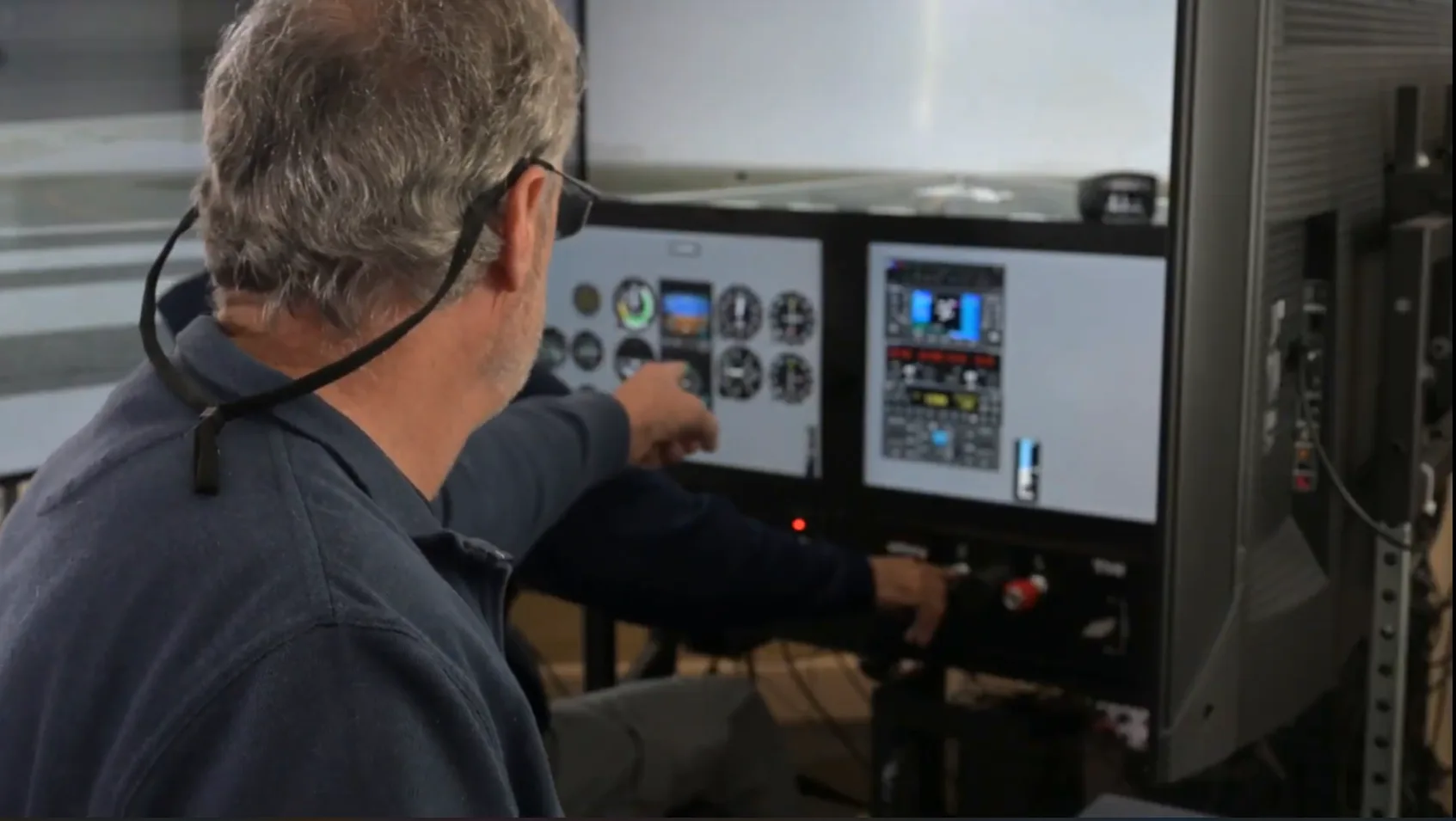
Here is why that helps a timeline. In the airplane, a missed approach costs you a full trip around the pattern. In the simulator, your instructor pauses the scenario, replays the approach, and resets you to the final approach fix. You repeat the hard part until it is calm, then carry that calm into the airplane. Holds, missed approaches, partial panel, and ILS, VOR and GPS procedures all get a first pass on the ground, on the same GNS 430/530 and GTN 650/750 avionics family you will meet in the cockpit.
The simulator does not replace the airplane. The 250 nautical mile IFR flight and your airplane instrument training happen in the air, and that is where weather has the final word.
A sample six-week path from first lesson to checkride
This sample assumes you already hold your private pilot certificate, have the cross-country time, and train four to five days a week. Treat it as a planning model.
| Week | Focus | Where it happens |
|---|---|---|
| Week 0 (before you start) | Knowledge test study, medical and logbook check, checkride booking request | Ground study and online |
| 1 | Attitude instrument flying, scan, navigation, holds | Simulator, with a pre-brief and debrief each day |
| 2 | ILS, VOR and GPS approaches, missed approaches, partial panel, system failures | Simulator on our Instrument Rating Accelerator |
| 3 | First IFR airplane flights, clearances, ATC communication | Airplane, with simulator days as weather backup |
| 4 | The 250 nautical mile IFR cross-country, weather buffer | Airplane |
| 5 | Mock oral and mock checkride flight, the three-hour check | Simulator and airplane |
| 6 | Checkride, plus a spare day or two | Examiner and airplane |
Week 0 comes first because the knowledge test comes before the practical test, and the examiner request goes in early because examiner calendars vary by location. Weeks 1 and 2 are the simulator-heavy block, which is the part of the plan we control most closely. Weeks 3 and 4 depend on weather and airplane availability.
This is an example built on a stated pace. Weather, airplane and instructor availability, examiner scheduling and your own progress move the real dates, so treat week 6 as the best case and plan a cushion on either side of it.
Why a tight schedule shortens the calendar
When lessons come once a week, the first part of each session goes to remembering the last one. Instrument flying is perishable, and holds and approach briefings fade quickly. A consecutive-day schedule removes the relearning gap, which is why our traveling pilot program is built around 2 to 3 consecutive days of simulator training for pilots who fly in from out of town.
The same logic helps local pilots. If you can give us four or five days in a row for the simulator block, you arrive at the airplane phase with procedures already in your hands. Your airplane hours go to what only the airplane teaches: real clearances, real turbulence and real ATC. For a longer look at how this plays out for visiting pilots, read our post on accelerated flight training for traveling pilots.
Three things that stretch an accelerated timeline
Weather in the airplane phase. Low ceilings help instrument students log real conditions, but thunderstorms, icing and strong winds do not. Build one or two spare days into weeks 3 to 5. Our post on flying in the soup explains what instrument conditions feel like so you know what to expect.
The three-hour window. Your airplane instrument training must fall within the 2 calendar months before the checkride. If a weather gap or a missed examiner slot pushes you past that window, you repeat the training. Count backward from your test date when you set your schedule.
Checkride scheduling. Examiners work to their own calendars, so ask for a date early and keep your plan flexible. Our guide to the importance of the FAA checkride walks through what the oral and flight portions test.
How to know you are ready for the checkride
Readiness shows up in what you can do. You are ready when you can fly an approach to standards with the weather and workload changing around you, brief a missed approach without hesitation, and talk through your decisions in plain language during the oral exam. Mock checkrides in week 5 expose weak spots while there is still time to fix them.
If your rating comes with a gap before you finish, the simulator keeps you sharp. Our Instrument Currency sessions let you log approaches, holds and course tracking, and our IPC Accelerator helps rated pilots renew instrument proficiency later.
Planning the budget and the schedule together
Time and money travel together in flight training, because long gaps create review hours. If you plan to finance your training or spread out the cost, bring that plan to your first conversation with us so the schedule and the budget fit each other. We would rather build one realistic plan with you than hand you a date we cannot stand behind. For a quick look at how our programs fit together, start on our flight training page.
Instrument rating timeline FAQ
How many weeks does an accelerated instrument rating take?
A focused plan with four to five training days a week can take about six weeks from the first lesson to the checkride. Weather, airplane availability, examiner scheduling and your readiness can add time, so plan a cushion.
Can I finish an instrument rating in a few days?
No. The rating requires airplane instrument training, a 250 nautical mile IFR flight and a checkride, so the full path takes longer than a few days. Our traveling pilot block covers the simulator training in 2 to 3 consecutive days, and the airplane phase and checkride come after it.
How many simulator hours count toward the rating?
Simulator time counts toward the 40 hours of instrument time up to a limit that depends on the device type and its FAA approval. Contact us and we will confirm exactly what applies to your plan.
What if the weather cancels my airplane flights?
Plan one or two spare days in the airplane weeks and use simulator sessions to keep your skills moving while you wait for a flyable day. The simulator keeps your momentum while the airplane requirements wait for a flyable day.
What should I finish before I start?
Hold a private pilot certificate, have your cross-country time logged, and start studying for the FAA knowledge test. Having these done lets you spend your first week on instrument flying instead of paperwork.
Ready to map your instrument rating timeline?
Tell us your start date, your free days and your flying experience, and we will build a week-by-week plan with you, including where the simulator sessions fit and where to keep a weather cushion. Contact us to start your accelerated instrument rating plan.