
How Simulator Hours Cut Your Instrument Rating Cost in 2026

Published by:
Todd O.
Published on:
Read time:
8 min read
It is 9 p.m., the spreadsheet is open, and one line keeps growing: airplane time. If you are pricing accelerated instrument flight training, the question that decides your bill is which hours in your plan need an airplane and which ones do not. Every hour you move out of the airplane without losing training value is a line on the bill that gets smaller.
Here at Solid Ground Aviation, we put the repeatable, weather-proof work in the simulator and save airplane time for what only an airplane can teach. This guide shows where the money goes in an instrument rating, where simulator hours lower it, where they do not, and how to build a budget without guessing at a single price.
The six lines of an instrument rating bill
Most students picture one number. The bill is really six lines, and a simulator touches some of them far more than others.
| Budget line | What drives it | Can simulator time lower it? |
|---|---|---|
| Airplane time | Hours in the airplane and its hourly rate | Yes, for hours the FAA lets a device replace |
| Instructor time | Instruction hours, in the airplane and on the ground | Partly, through fewer repeated lessons |
| Training device time | Hours in an approved simulator and its hourly rate | This is the line that moves up as airplane time moves down |
| Study and testing | Ground study, test prep, the FAA knowledge test | Little |
| Checkride | The examiner’s fee and the airplane for the practical test | No |
| Repeat hours | Weather gaps, cancelled lessons, relearning, a missed checkride standard | Yes |
Notice that the last line rarely shows up on a quote. Repeat hours are the cost nobody plans for, and they are the line a good plan attacks first. Our Instrument Rating Accelerator is built around that line.
For a broader look at how a simulator-first model changes a training budget, our private pilot cost breakdown walks through the same idea one rating earlier.
What the FAA lets a simulator replace
An instrument rating is added to your private pilot certificate, and 14 CFR 61.65 sets the floor. You need 40 hours of actual or simulated instrument time, and 15 of those hours must come from an authorized instructor. You also need 50 hours of cross-country time as pilot in command, 10 of them in an airplane.
The FAA lets part of that instrument time come from an aviation training device. The cap is 10 hours in a basic aviation training device (BATD) and 20 hours in an advanced aviation training device (AATD). The credit applies only when the FAA approves and authorizes the device, an authorized instructor provides the time, and the FAA has approved the instrument training and tasks flown in it. That is a maximum, so what applies to your plan depends on the device, its approval and the tasks you fly in it. Our SG-2 simulators are FAA-approved AATDs, and you can see the hardware on our simulators page.
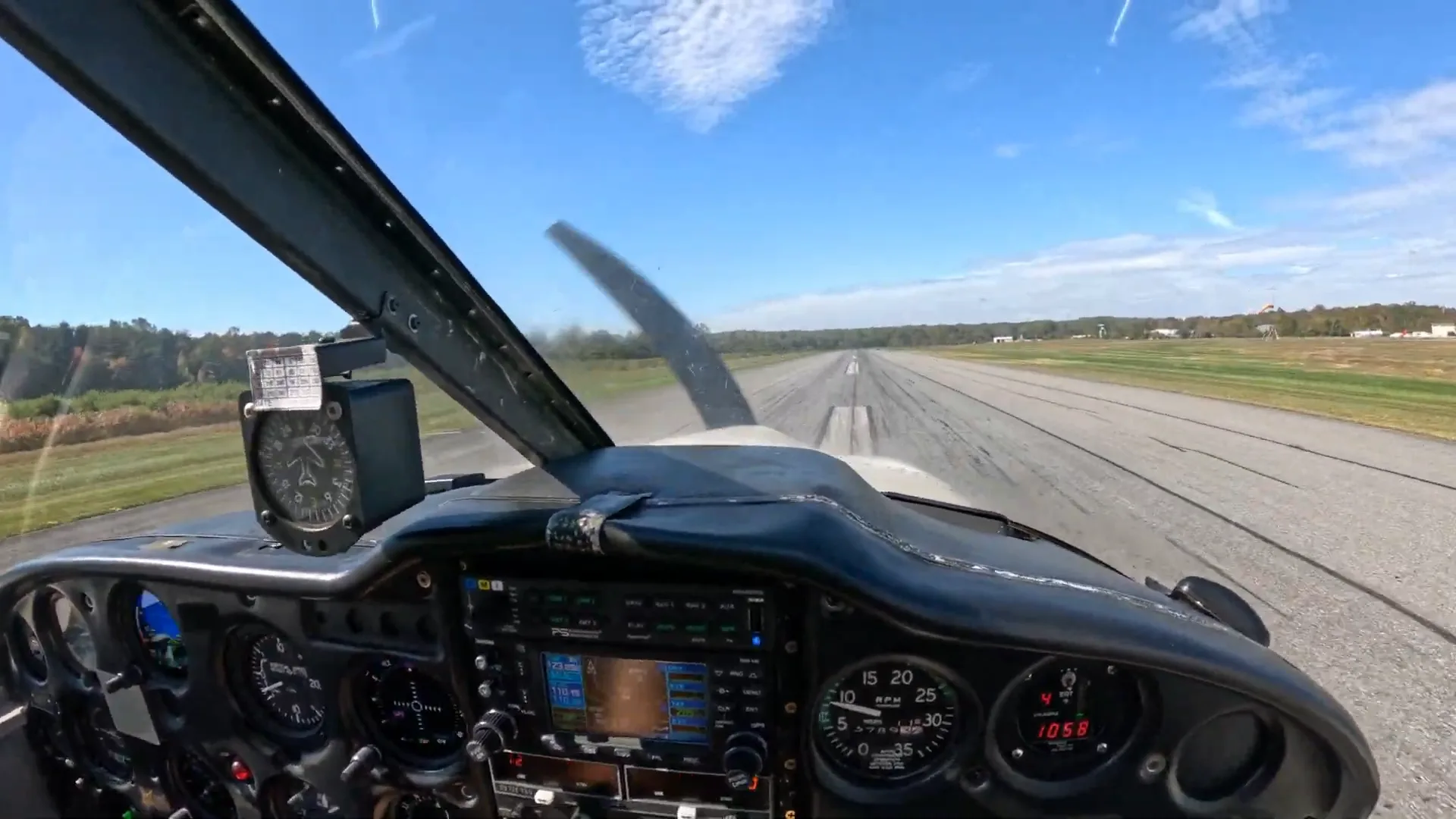
Before you plan around that cap, know that some instrument time always happens in an airplane. The rules require 3 hours of instrument training in an airplane within the 2 calendar months before your checkride, 10 hours of airplane cross-country time, and one IFR flight of at least 250 nautical miles. No device removes those lines. Our requirements checklist covers what to have in hand before you start.
The arithmetic of moving one hour
You need two numbers: the full hourly price of an airplane hour with an instructor, and the full hourly price of a device hour with an instructor. An authorized instructor is part of both hours, so compare them with the instructor included.
Simulator hours cost less per hour than airplane hours. So every hour that moves from the airplane to an approved device changes your bill by the gap between the two prices. Move five hours and you multiply the gap by five. Move hours up to the FAA maximum for your device and you multiply the gap again.
Two things decide whether that gap becomes real savings. The first is whether the hours you move are ones the device does well: holds, missed approaches, ILS, VOR and GPS procedures, partial panel and system failures. The second is whether the move leaves you needing fewer airplane hours overall, instead of the same airplane hours plus extra device hours. Savings depend on both, so bring your own numbers and run the math on the plan in front of you.
Where a simulator saves money without moving a single FAA hour
The FAA cap is the obvious saving. The quieter ones come from how the training works.
Repetition is cheap in a simulator. In an airplane, a botched missed approach costs you a trip around the pattern. In our simulator, your instructor pauses the scenario, replays the approach, and resets you to the final approach fix. You fly the foggy approach again and again until it is calm, then take that calm into the airplane. That is how a student reaches the airplane phase with procedures already in their hands, and why the airplane hours go to real clearances, real turbulence and real air traffic control.
Weather cancels airplanes, not simulators. A lesson that cancels for low ceilings or thunderstorms gives you nothing, and the gap that follows creates review work. Simulator sessions run in any weather, so the schedule keeps moving. Our post on weather-proofing your flight training goes deeper on this.
When lessons come once a week, the first part of every session goes to remembering the last one. A block of consecutive days, like the 2 to 3 day simulator block in our traveling pilot program, cuts that gap. Our timeline post shows how long an accelerated instrument rating takes from first lesson to checkride.
Where a simulator will not lower your bill
A cost guide that only lists savings reads like a sales page, so here is what a simulator will not do.
The checkride costs what it costs. The examiner’s fee and the airplane for the practical test are fixed lines, and no simulator hour changes them. Our guide to the importance of the FAA checkride explains what the oral and flight portions test.
The airplane items stay. The 3-hour airplane block, the cross-country time and the 250 nautical mile flight all happen in the air. Plan for them in your budget from day one.
An unready student pays twice. A simulator can build skill quickly, and it cannot buy you a pass. If you reach the checkride before you reach the standard, a retest adds lines to the bill. Readiness protects your budget, and your instructor recommends you when you meet the standard. FAA minimum hours are a floor, and real totals vary with proficiency, lesson frequency, weather, aircraft availability and checkride scheduling.
Six items to settle before you accept any quote
Whether you plan to train with us or anywhere else, these six items turn a quote into a plan you can budget against. In your first conversation with us, here is what we help you pin down:
- Airplane hours you should expect, and what they cover.
- Device hours in the plan, plus the device type and its FAA approval.
- Instructor time, and whether it is inside each hourly price.
- Testing and checkride costs, kept separate from training hours.
- Weather-day plan, meaning what happens to your schedule when the airplane cannot fly.
- Extra-hour policy, so you know how a repeat lesson is handled.
If you plan to finance your training or spread out the cost, bring that plan to the same conversation so the schedule and the budget fit each other. For a quick look at how our programs fit together, start on our flight training page.
Instrument rating cost and simulator FAQ
Do simulator hours count toward an instrument rating?
Yes, up to the FAA limit. The FAA allows a maximum of 10 hours in a basic aviation training device or 20 hours in an advanced aviation training device, when the device and the training tasks are FAA-approved and an authorized instructor provides the time. Our FAQ covers how we schedule sessions.
Can I earn the whole instrument rating in a simulator?
No. The rules require airplane instrument training, airplane cross-country time, a 250 nautical mile IFR flight and a checkride in an airplane, so the airplane portion never reaches zero.
Will simulator hours lower my total cost?
They can. Simulator hours cost less per hour than airplane hours, and the plan can also avoid repeat hours after weather gaps. The size of the saving depends on the rates and on how many hours move, so we build it with your numbers.
Is simulator training easier than flying the airplane?
It is more repeatable, and the standard stays the same. Pause, replay and reset let you practice the same approach until it is calm, and you still meet the checkride standard. See our look at simulator training myths for more.
What should I have ready before I start?
A private pilot certificate, your logged cross-country time, and a start on the FAA knowledge test study. The requirements checklist walks through each item.
Ready to build your instrument rating budget?
Tell us your start date, your logged time and your goals, and we will map a plan with you that shows where each hour happens and where the simulator lowers the bill. Contact us to start your accelerated instrument rating plan.