What a Cessna 172 Lesson Looks Like in Maryland: Meet the Plane and Your Instructor (2026)
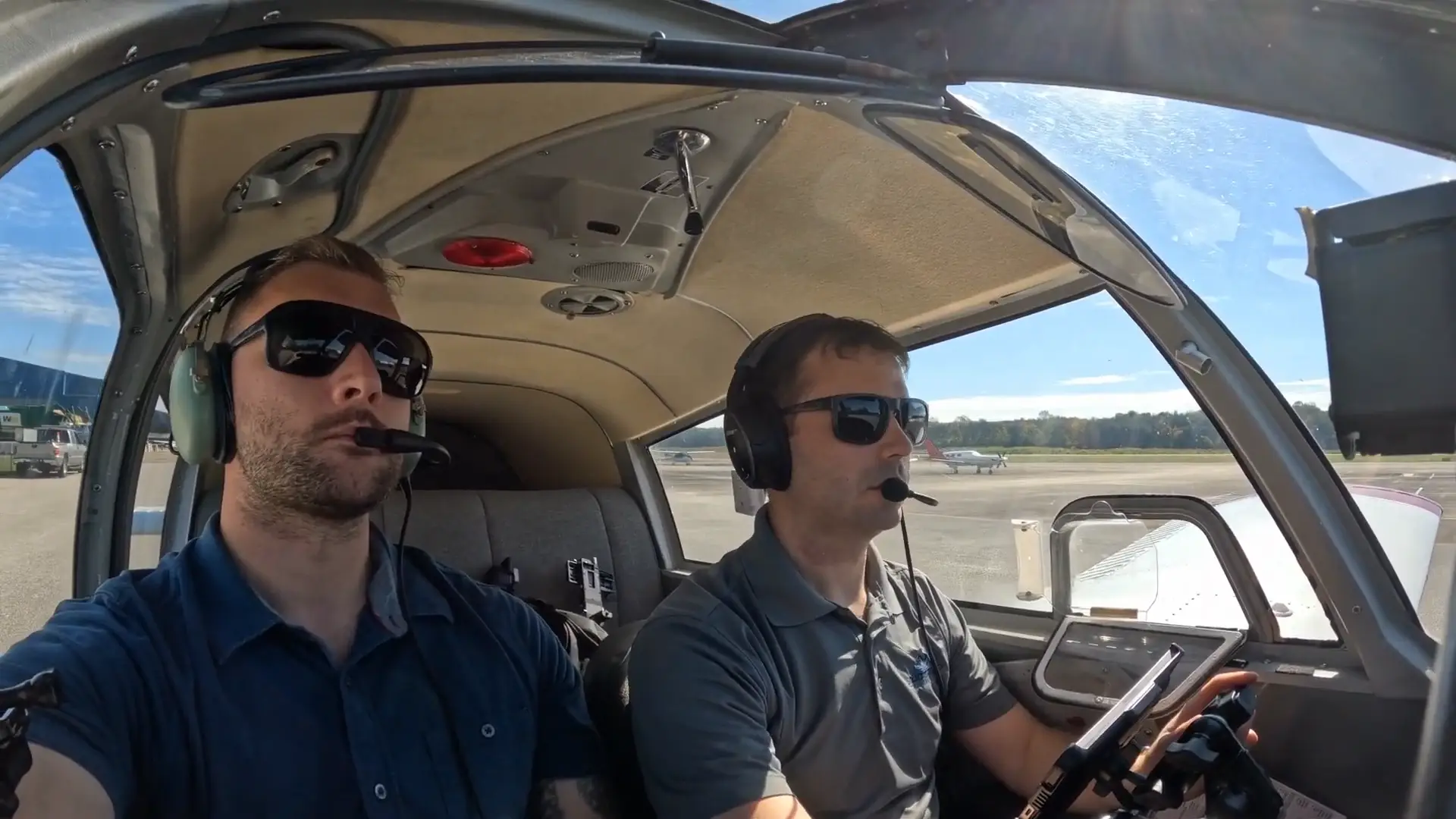
Picture the first ten minutes of a lesson. You walk onto the ramp with a headset in your hand, your instructor is already at the wing with a checklist, and the Cessna 172 is waiting with its door open. Knowing what happens next takes most of the nerves out of flight training, so this post walks through a lesson from the briefing table to the debrief and introduces the people who teach it.
At Solid Ground Aviation, we train at Fort Meade Executive Airport (KFME) in Fort Meade, Maryland, in our fleet of Cessna 172s. If you are comparing schools for flight training in Maryland, this is what a lesson with us is built around, and it gives you a way to picture yourself in the seat before you ever book.
A lesson starts at the table, before the engine does
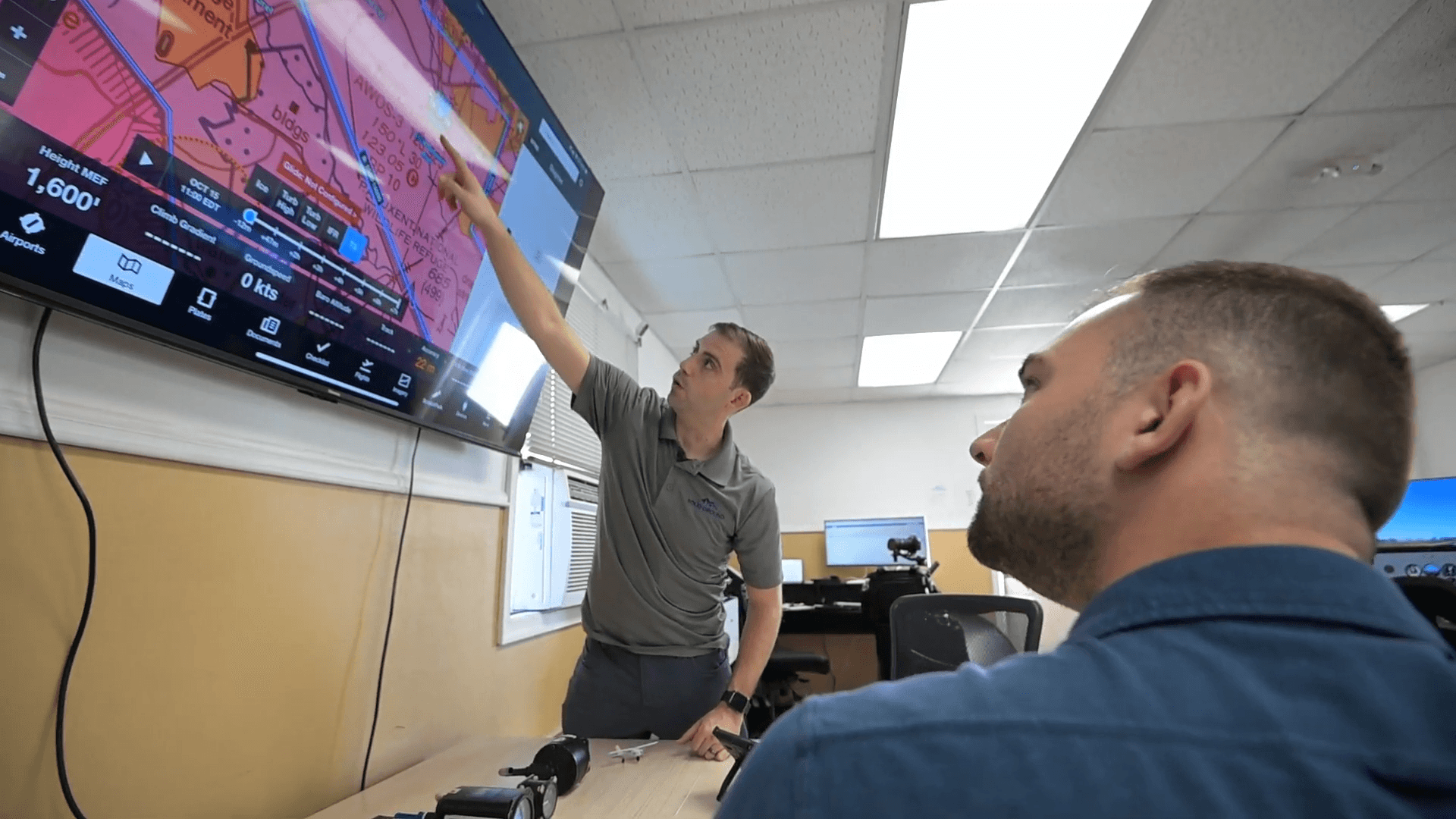
Most lessons open with a short briefing. Your instructor goes over the goal for the day, the maneuvers you will practice and the weather, and you ask whatever is on your mind. The briefing turns a flight into a plan, so you climb in knowing what you are trying to learn rather than hoping it shows up.
Preparation pays off in your wallet too. A student who arrives knowing the plan wastes fewer minutes in the air, and airplane time is the most expensive time in training. Our Private Pilot License program is built around that idea, with the simulator used to rehearse work before you fly it for real.
The preflight walkaround is your first lesson in judgment
Before any flight, you and your instructor walk around the airplane with a checklist in hand. You check the control surfaces, the tires, the fuel and the oil, and you look at the airplane the way a pilot is expected to look at it. Preflight is where airmanship starts, and it is a habit you carry to every airplane you ever fly.
Walking the ramp is also the moment the airplane becomes real. You see how the wing sits above the cabin, where the controls connect and how everything fits together, and your instructor explains each check as you make it. If you want to see the airplane before you ever book, visit our Cessna 172 fleet.
Why we train in a Cessna 172
The Cessna 172 is one of the most familiar training airplanes in the country, and it earns that reputation as a steady, forgiving platform to learn in. Our fleet of Cessna 172s carries G5 instruments and Garmin GPS, so you learn on modern equipment and a panel you can read quickly.
Cost is part of the picture. A Cessna 172 is $185 an hour and instruction is $70 an hour, and both come before ground instruction, testing and supplies. Because airplane time is the biggest line on your bill, our Instrument Rating program and our other programs move repeatable work into the simulator and keep your airplane hours for what only an airplane can teach.
In the air: one skill at a time
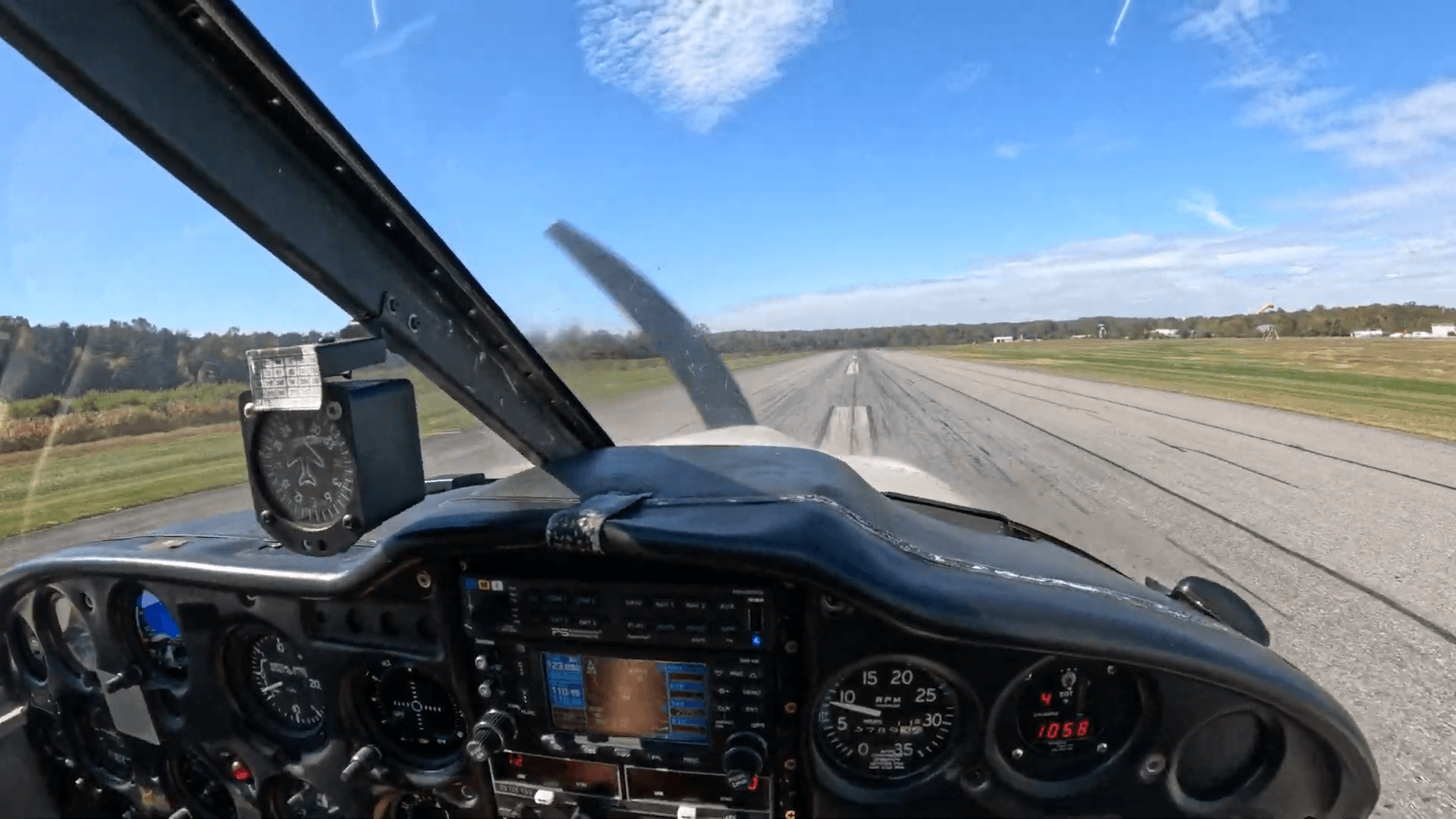
Once you are airborne, your instructor picks work from your syllabus and builds it in steps. Early lessons commonly cover the basics of controlling the airplane, such as straight and level flight, turns, climbs and descents, along with radio calls and, in time, takeoffs and landings. You are never learning everything at once, which is why a lesson that feels huge in the doorway feels manageable in the seat.
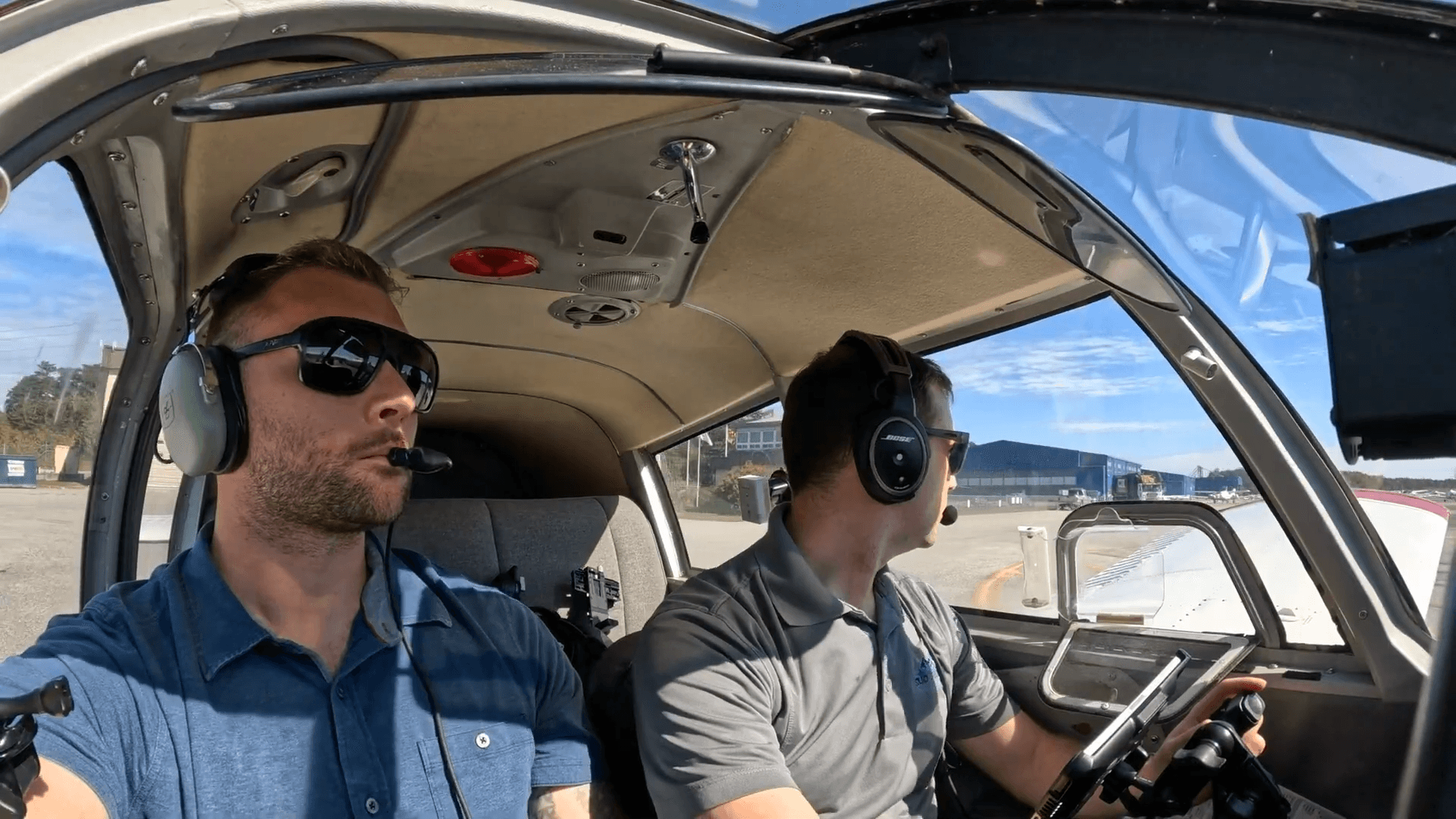
Your instructor flies with you until you are ready for more, and you take on more of the work as your skills grow. Your first landings are a team effort, and your first solo comes when your instructor judges you are ready, not before. Radio calls come easier when you have said them out loud before the flight, and that is where simulator practice earns its place. If you want to practice those calls before your first flight, our post on boosting your ATC confidence shows how the simulator helps.
The debrief is where the lesson sticks
After landing, you and your instructor sit down and go through the flight. What went well, what needs another pass, and what comes next. A good debrief is the part of the lesson you take home, because it turns a flight you felt into a lesson you understand.
Take notes and ask questions while the flight is fresh. Your next lesson starts from the debrief, so each flight builds on the one before it, and nothing you learned has to be rediscovered a week later. Write down the one thing you want to fix first, and bring it to the briefing table next time.
When the weather or the airplane says no
Some days the ceiling is too low or an airplane needs maintenance. We don’t cancel lessons. Your lesson moves to the simulator or ground instruction, so your training keeps moving and you keep your lesson time.
That is the reason the simulator is built into every program. You can read more about how it works in our post on weather-proofing your flight training. With an authorized instructor, the FAA-approved SG-2 can credit some of that time toward an instrument rating or a private pilot certificate, within the limits set in our approvals.
Meet the instructors who teach here
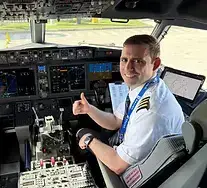
Every instructor on our team holds an FAA instructor certificate, and most have flown for the airlines, the military or corporate operators. You can read every bio on our team page, and here is a taste of who you might meet.
- Todd O’Brien, founder and chief instructor, holds CFI, CFII, MEI and ATP certificates, has been flying since 2007 and has nearly 5,000 hours, and flies for a major airline.
- Todd Breese has flown professionally for over 41 years, starting as a Naval aviator and later as a FedEx international captain on the Airbus A300.
- Mike Allen started flying gliders in England over 60 years ago and has given 7,000 hours of flight instruction.
- Jeff Barnett is a former Learjet and USAir Express pilot with over 4,000 hours of instruction given, and he especially enjoys teaching instrument students.
- Marty Sacks has more than 40 years of flying behind him and devotes much of his teaching to the Civil Air Patrol.
Quick answers about your first lessons
Do I need experience before my first lesson?
No. You do not need any flight experience to start, and your first lessons are built around where you are today. Come with questions and a willingness to learn, and your instructor handles the rest, from showing you how to adjust the seat to explaining each control.
How long does it take to get a private pilot certificate?
The FAA minimum is 40 hours of flight time under Part 61, and the FAA cites about 75 hours as the U.S. average. Your number varies with how often you fly and how prepared you arrive.
Can I try a lesson before I commit to a program?
Yes. A Discovery Flight lets you meet an instructor, see the Flight Training Center and get a plan for your first steps.
Meet the airplane and your instructor
The simplest way to learn what a lesson feels like is to take one. Book a Discovery Flight and you will meet an instructor, see our airplane and leave with a plan for your first steps in flying. Bring your questions, your schedule and your budget, and we will help you map what a first month of lessons looks like.