SG-2A vs SG-2B vs SG-2C: Which Flight Simulator to Buy

Published by:
Todd O.
Published on:
Read time:
9 min read
A student can fly the same ILS three times in a simulator in the time it takes to preflight and taxi the airplane. Whether that hour counts in the logbook, and how much, depends on which simulator configuration you bought. It’s usually the first thing flight schools ask when they come to us to buy a flight simulator.
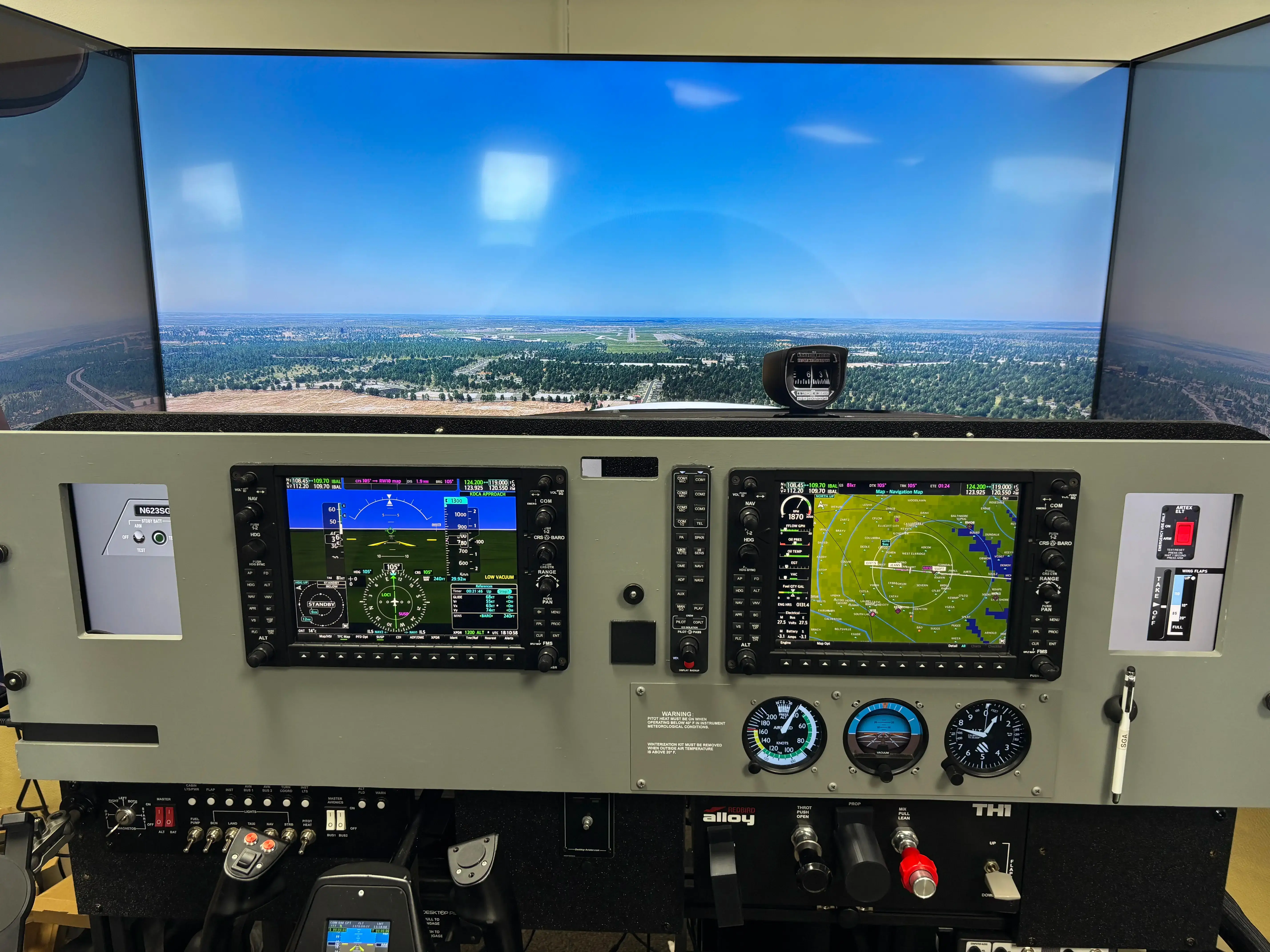
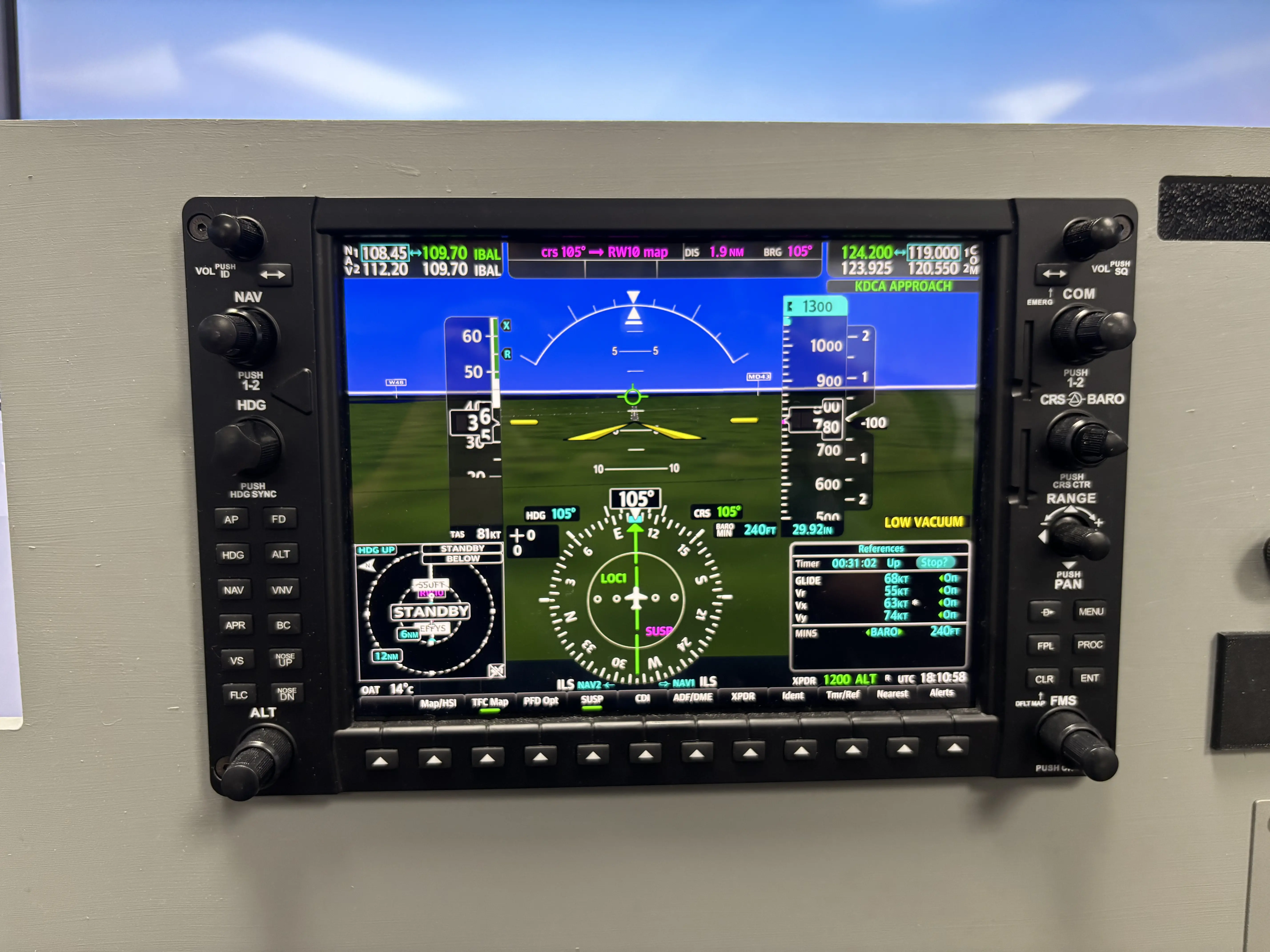
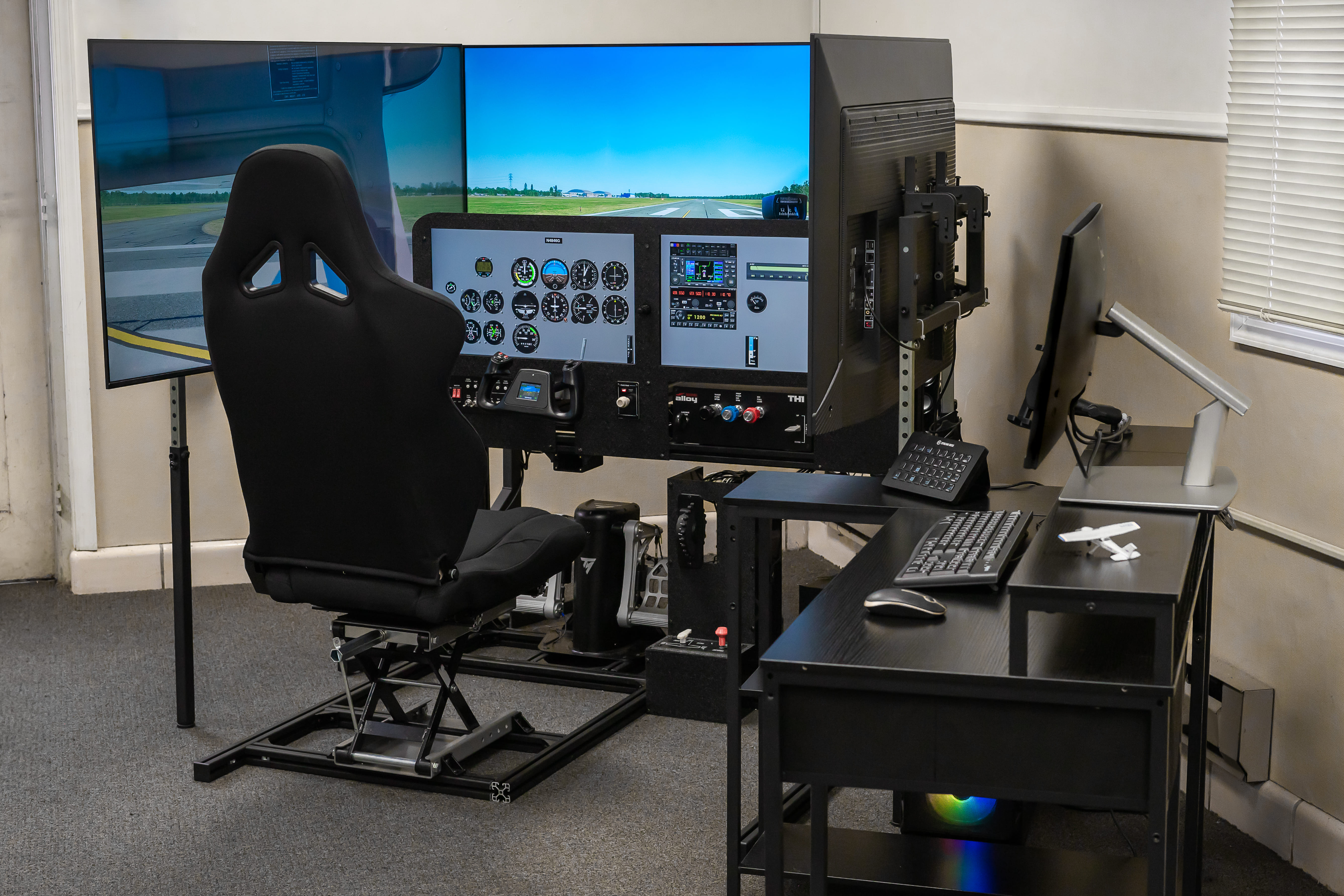
The SG-2A is our FAA-approved Advanced Aviation Training Device (AATD) and earns the most logbook credit. The SG-2B is our FAA-approved Basic Aviation Training Device (BATD) with 35 approved panel layouts that can match the airplanes you actually fly. The SG-2C is the custom mode for aircraft the FAA has not reviewed, from a Baron to a Boeing 737. All three run on one base simulator, and you can buy the A and B together. At Solid Ground Aviation, we build the SG-2 and use it for our own simulator flight training at Tipton Airport (KFME).
One simulator, three ways to use it
The SG-2 is a single base simulator with three configurations. Two carry their own FAA Letter of Authorization (LOA), the approval that lets students and pilots log the time. The third is for training only.
| Configuration | FAA status | Cockpit | Best fit |
|---|---|---|---|
| SG-2A | FAA-approved AATD | Cessna 172S with G1000 (Legacy and NXi) | Schools that want the most credit, including instrument and commercial students |
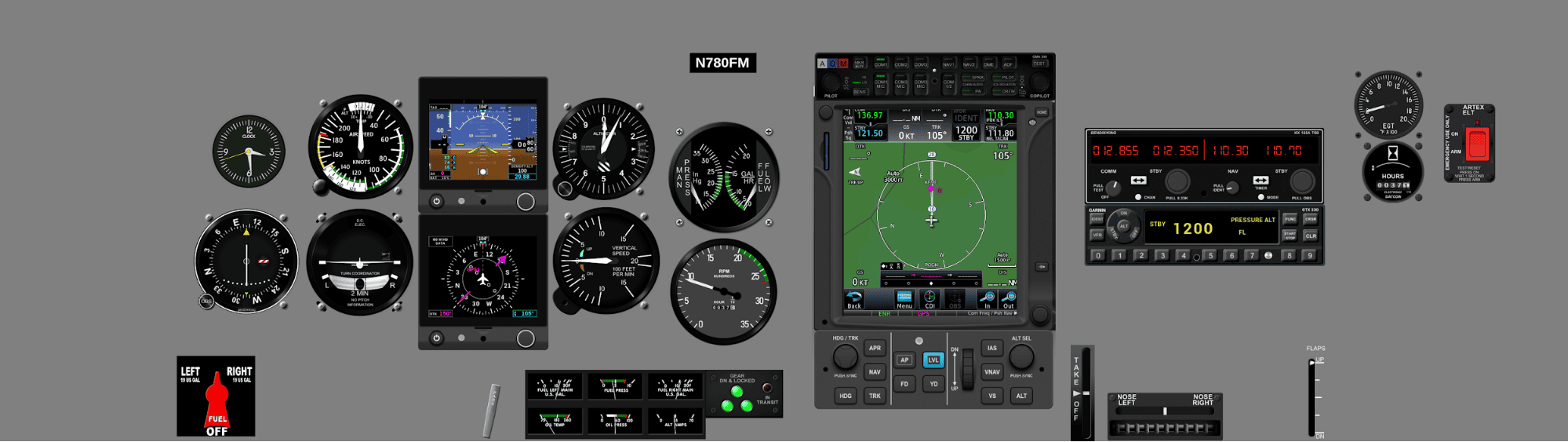
| SG-2B | FAA-approved BATD | 35 approved panels: C172S, PA-28, PA-28R | Schools that want the sim to match the panels in their fleet |
| SG-2C | Not approved for logging | 800+ instrument library, custom aircraft, 737-800 add-on | Fleet replication, new avionics, jet familiarization |
Switching between the approved and custom configurations takes a few minutes, so one room can support a private student in the morning and a jet-transition session after lunch. You can see every panel we offer on our SG-2 simulator page.
What each configuration puts in the logbook
The biggest difference between the models is credit. The limits below come from each device’s FAA approval letter, so you can build a syllabus around them.
| Credit (Part 61) | SG-2A AATD | SG-2B BATD | Program it supports |
|---|---|---|---|
| Private Pilot (61.109(k)) | Up to 2.5 hours | Up to 2.5 hours | Private Pilot Accelerator |
| Instrument Rating (61.65(i)) | Up to 20 hours | Up to 10 hours | Instrument Rating Accelerator |
| Commercial Pilot (61.129(i)) | Up to 50 hours | Not approved | Accelerated Training |
| Airline Transport Pilot (61.159(a)(4)) | Up to 25 hours | Not approved | Jet Transition |
| Instrument currency (61.57(c)(2)) | Yes | Yes | Instrument Currency |
| Instrument Proficiency Check (61.57(d)) | Approved ACS tasks | Not approved | IPC Accelerator |
For Part 141 schools, the SG-2A is approved for up to 40% of instrument training time, 20% of commercial, 25% of ATP, and 5% of CFI and CFII course time. The SG-2B covers up to 15% of private and 25% of instrument training time.
Two limits apply to both devices. Neither one can be used for any part of a practical test or the flight portion of a flight review. On the SG-2A, an IPC can include the tasks the Instrument ACS allows, but the whole check can’t be done in the device. Our IPC vs. proficiency check guide explains how that plays out for your customers.
When the SG-2A AATD earns its place
Pick the SG-2A when logbook credit drives your revenue. With 20 instrument hours instead of 10, an instrument student can move twice as much of the rating into the sim. Commercial and ATP credit also brings in time-building customers the BATD can’t serve.
The cockpit is a Cessna 172S G1000 with real knobs and buttons and both Legacy and NXi emulation, so students practice the same button sequences they’ll use in a glass-panel airplane. If your fleet is G1000 or you teach heavy instrument volume, this is the one we recommend. Our instrument currency program runs on this exact setup.
When the SG-2B BATD matches your fleet better
Pick the SG-2B when panel familiarity matters more than maximum credit. If your students fly a PA-28R with a G5, a GTN 750, and a GFC 500, there’s an approved panel for that. If you run mostly round-dial 172s with a GNS 430W, there’s one for that too.
The 35 approved panel combinations mix Cessna 172S, PA-28, and PA-28R airframes with round dials, Garmin G5, Aspen EFD1000, G1000, GNS 430W/530W, GTN 650/750, and GFC 500 or S-TEC 55X autopilots. When students practice on the avionics they’ll see on the ramp, they spend less airplane time hunting for buttons. That makes the SG-2B a good fit for private, early instrument, and currency training. See how we use it for GPS and avionics training.
When the SG-2C custom setup adds value
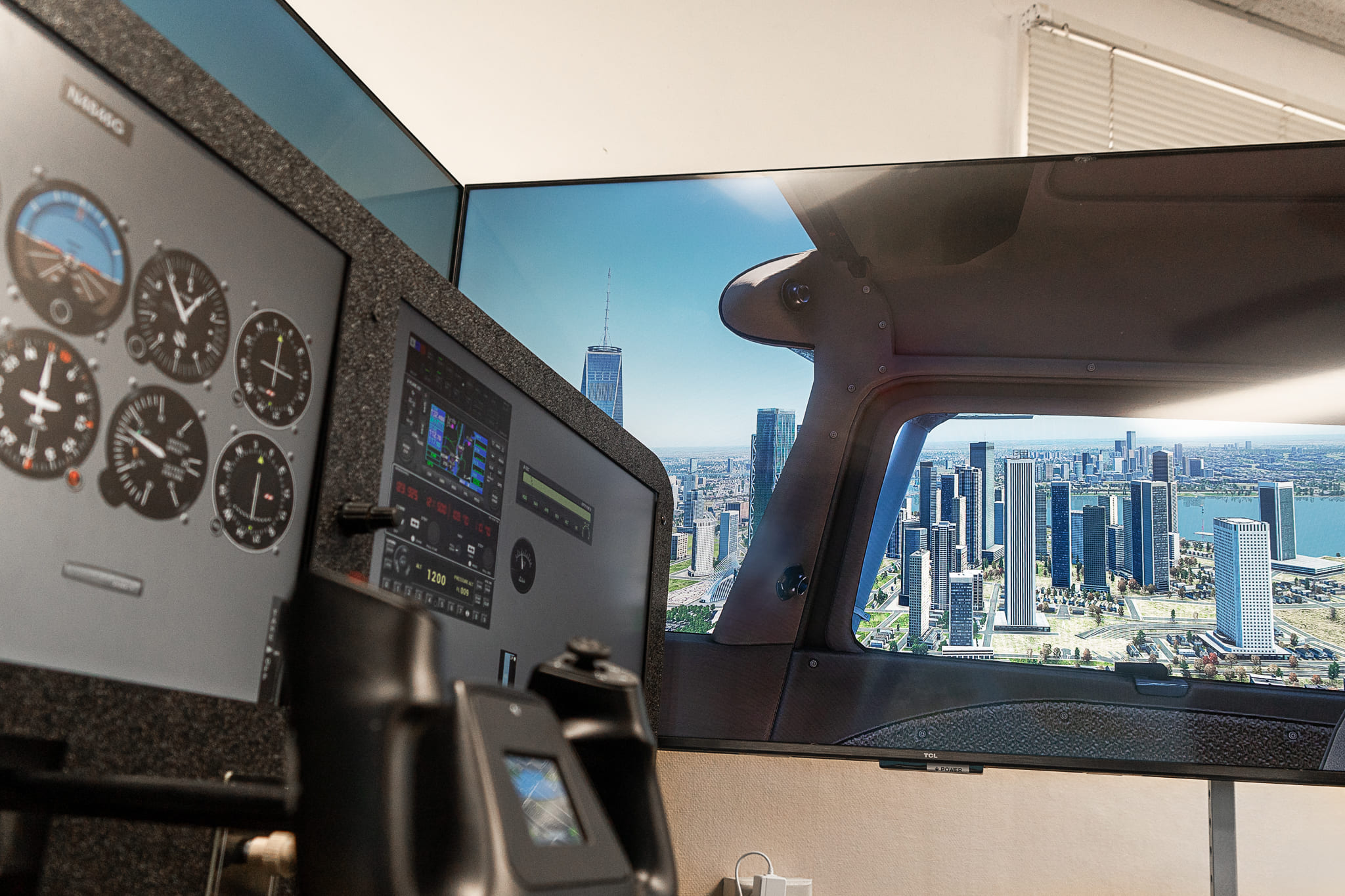
The SG-2C is the SG-2 running aircraft the FAA has not reviewed. Custom panels are built from a library of more than 800 instruments. You can model a specific tail number, replicate your whole fleet, or teach a new avionics suite before it is installed.
It ships with the Beechcraft Baron 58, Cirrus SR22, Cirrus Vision Jet, and Boeing 737-800. The 737 setup has a working automation panel and FMS, which helps with mode awareness and crew coordination before an airline interview. Time flown in the SG-2C doesn’t count toward any certificate, rating, or type rating. We use it that way in our Jet Transition course.
What every SG-2 includes
The hardware is the same in every configuration. Each SG-2 has force-feedback flight controls that load up like the selected aircraft, wrap-around visuals, and an instructor station for failures, weather, and repositioning.
It also connects to online air traffic control, live traffic, and EFB apps such as ForeFlight. Our guide to the instructor station walks through what your CFIs can control from that desk.
How to choose in five minutes
Three questions settle it for most schools.
- Do you train instrument, commercial, or ATP students in real volume? Choose the SG-2A, or the bundle.
- Is your fleet mostly round-dial, G5, Aspen, or GTN 172s and Pipers? The SG-2B panels will feel like home.
- Do you want to replicate a specific aircraft or introduce jets? Add SG-2C aircraft to either choice.
Our post on turning empty airport office space into a training center shows how schools put that room to work.
Frequently asked questions
Can we switch configurations after we buy?
Yes. The SG-2 switches between approved and custom configurations in a few minutes. If you buy both the A and B, one simulator runs both FAA-approved devices. Details are on our simulators page.
Which configuration gives the most FAA credit?
The SG-2A AATD. It allows up to 20 instrument hours, 50 commercial hours, and 25 ATP hours under Part 61. See how students use it in our Instrument Rating Accelerator.
Can students log time in the SG-2C?
No. SG-2C and 737-800 time is for training only and does not count toward certificates, ratings, or type ratings. It works well for jet transition and interview prep.
Can pilots do an IPC in the simulator?
On the SG-2A, pilots can complete the IPC tasks the Instrument ACS allows, but the check cannot be completed entirely in the device. The SG-2B is not approved for any part of an IPC. Our IPC Accelerator shows how we split the work.
What support comes with the purchase?
A 1-year parts and software warranty and a 1-year service plan are included, handled remotely or in person. Contact us for current lead times and installation details for your location.
See the SG-2 in action before you decide
The quickest way to decide is to fly the configurations back to back. Book a sales call and live demo, and we’ll show you the SG-2A, the SG-2B panels that match your fleet, and the custom aircraft you are considering. Schedule your SG-2 demo.